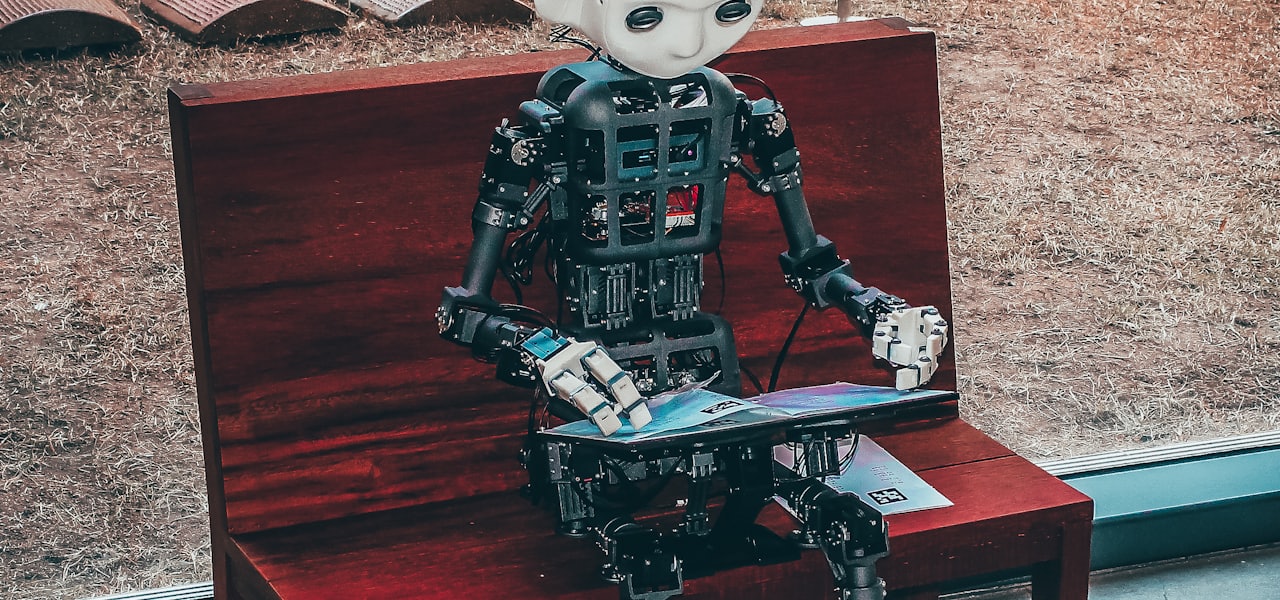
Character computing is a trans-disciplinary field of research at the intersection of computer science and psychology. It is any computing that incorporates the human character within its context. Character is defined as all features or characteristics defining an individual and guiding their behavior in a specific situation. It consists of stable trait markers (e.g., personality, background, history, socio-economic embeddings, culture,...) and variable state markers (emotions, health, cognitive state, ...). Character computing aims at providing a holistic psychologically driven model of human behavior. It models and predicts behavior based on the relationships between a situation and character. Three main research modules fall under the umbrella of character computing: character sensing and profiling, character-aware adaptive systems, and artificial characters. == Overview == Character computing can be viewed as an extension of the well-established field of affective computing. Based on the foundations of the different psychology branches, it advocates defining behavior as a compound attribute that is not driven by either personality, emotions, situation or cognition alone. It rather defines behavior as a function of everything that makes up an individual i.e., their character and the situation they are in. Affective computing aims at allowing machines to understand and translate the non-verbal cues of individuals into affect. Accordingly, character computing aims at understanding the character attributes of an individual and the situation to translate it to predicted behavior, and vice versa. ''In practical terms, depending on the application context, character computing is a branch of research that deals with the design of systems and interfaces that can observe, sense, predict, adapt to, affect, understand, or simulate the following: character based on behavior and situation, behavior based on character and situation, or situation based on character and behavior.'' The Character-Behavior-Situation (CBS) triad is at the core of character computing and defines each of the three edges based on the other two. Character computing relies on simultaneous development from a computational and psychological perspective and is intended to be used by researchers in both fields. Its main concept is aligning the computational model of character computing with empirical results from in-lab and in-the-wild psychology experiments. The model is to be continuously built and validated through the emergence of new data. Similar to affective and personality computing, the model is to be used as a base for different applications towards improving user experience. == History == Character computing as such was first coined in its first workshop in 2017. Since then it has had 3 international workshops and numerous publications. Despite its young age, it has already drawn some interest in the research community, leading to the publication of the first book under the same title in early 2020 published by Springer Nature. Research that can be categorized under the field dates much older than 2017. The notion of combining several factors towards the explanation of behavior or traits and states has long been investigated in both Psychology and Computer Science, for example. == Character == The word character originates from the Greek word meaning “stamping tool”, referring to distinctive features and traits. Over the years it has been given many different connotations, like the moral character in philosophy, the temperament in psychology, a person in literature or an avatar in various virtual worlds, including video games. According to character computing character is a unification of all the previous definitions, by referring back to the original meaning of the word. Character is defined as the holistic concept representing all interacting trait and state markers that distinguish an individual. Traits are characteristics that mainly remain stable over time. Traits include personality, affect, socio-demographics, and general health. States are characteristics that vary in short periods of time. They include emotions, well-being, health, cognitive state. Each characteristic has many representation methods and psychological models. The different models can be combined or one model can be preset for each characteristic. This depends on the use-case and the design choices. == Areas == Research into character computing can be divided into three areas, which complement each other but can each be investigated separately. The first area is sensing and predicting character states and traits or ensuing behavior. The second area is adapting applications to certain character states or traits and the behavior they predict. It also deals with trying to change or monitor such behavior. The final area deals with creating artificial agents e.g., chatbots or virtual reality avatars that exhibit certain characteristics. The three areas are investigated separately and build on existing findings in the literature. The results of each of the three areas can also be used as a stepping stone for the next area. Each of the three areas has already been investigated on its own in different research fields with focus on different subsets of character. For example, affective computing and personality computing both cover different areas with a focus on some character components without the others to account for human behavior. == The Character-Behavior-Situation triad == Character computing is based on a holistic psychologically driven model of human behavior. Human behavior is modeled and predicted based on the relationships between a situation and a human's character. To further define character in a more formal or holistic manner, we represent it in light of the Character–Behavior–Situation triad. This highlights that character not only determines who we are but how we are, i.e., how we behave. The triad investigated in Personality Psychology is extended through character computing to the Character–Behavior–Situation triad. Any member of the CBS triad is a function of the two other members, e.g., given the situation and personality, the behavior can be predicted. Each of the components in the triad can be further decomposed into smaller units and features that may best represent the human's behavior or character in a particular situation. Character is thus behind a person's behavior in any given situation. While this is a causality relation, the correlation between the three components is often more easily used to predict the components that are most difficult to measure from those measured more easily. There are infinitely many components to include in the representation of any of C, B, and S. The challenge is always to choose the smallest subset needed for prediction of a person's behavior in a particular situation.
Bitstrips
Bitstrips, Inc. was a Canadian media and technology company based in Toronto, founded in 2007 by Jacob Blackstock, David Kennedy, Shahan Panth, Dorian Baldwin, and Jesse Brown. The company created and offered a web application, Bitstrips.com, which allowed users to create comic strips using personalized avatars, and preset templates and poses. Brown and Blackstock explained that the service was meant to enable self-expression without the need to have artistic skills. Bitstrips was first presented in 2008 at South by Southwest in Austin, Texas, and the service later piloted and launched a version designed for use as educational software. The service achieved increasing prominence following the launch of versions for Facebook and mobile platforms. In 2014, Bitstrips launched a spin-off app known as Bitmoji, which allows users to create personalized stickers for use in instant messaging. In July 2016, Snapchat Inc. announced that it had acquired the company; the Bitstrips comic service was shut down, but Bitmoji remains operational, and has subsequently been given greater prominence within Snapchat's overall platform. == History == Bitstrips was co-developed by Toronto-based comic artist Jacob Blackstock and his high school friend, journalist Jesse Brown. The service was originally envisioned as a means to allow anyone to create their own comic strip without needing artistic skills. Brown explained that "it's so difficult and time-consuming to tell a story in comic book form, drawing the same characters again and again in these tiny little panels, and just the amount of craftsmanship required. And even if you can do it well, which I never could, it takes years to make a story." Brown stated that the service would be "groundwork for a whole new way to communicate", and went as far as describing the service as being a "YouTube for comics". Blackstock explained that the concept of Bitstrips was influenced by his own use of comics as a form of socialization; a student, Blackstock and his friends drew comics featuring each other and shared them during classes. He felt that Bitstrips was a "medium for self-expression", stating that "It's not just about you making the comics, but since you and your friends star in these comics, it's like you're the medium. The visual nature of comics just speaks so much louder than text." The service was publicly unveiled at South by Southwest in 2008. In 2009, the service introduced a version oriented towards the educational market, Bitstrips for Schools, which was initially piloted at a number of schools in Ontario. The service was praised by educators for being engaging to students, especially within language classes. Brown noted that students were using the service to create comics outside of class as well, stating that it was "so gratifying and shocking what people do with your tool to make their own stories in ways that you never would have anticipated. Some of them are just brilliant." In December 2012, Bitstrips launched a version for Facebook; by July 2013, Bitstrips had 10 million unique users on Facebook, having created over 50 million comics. In October 2013, Bitstrips launched a mobile app; in two months, Bitstrips became a top-downloaded app in 40 countries, and over 30 million avatars had been created with it. In November 2013, Bitstrips secured a round of funding from Horizons Ventures and Li Ka-shing. In October 2014, Bitstrips launched Bitmoji, a spin-off app that allows users to create stickers featuring Bitstrips characters in various templates. In July 2016, following unconfirmed reports earlier in the year, Snapchat Inc. announced that it had acquired Bitstrips. The company's staff continue to operate out of Toronto, but the original Bitstrips comic service was shut down in favour of focusing exclusively on Bitmoji, leaving many Bitstrips users to call for a reboot of the comic service.
Kinematic chain
In mechanical engineering, a kinematic chain is an assembly of rigid bodies connected by joints to provide constrained motion that is the mathematical model for a mechanical system. As the word chain suggests, the rigid bodies, or links, are constrained by their connections to other links. An example is the simple open chain formed by links connected in series, like the usual chain, which is the kinematic model for a typical robot manipulator. Mathematical models of the connections, or joints, between two links are termed kinematic pairs. Kinematic pairs model the hinged and sliding joints fundamental to robotics, often called lower pairs and the surface contact joints critical to cams and gearing, called higher pairs. These joints are generally modeled as holonomic constraints. A kinematic diagram is a schematic of the mechanical system that shows the kinematic chain. The modern use of kinematic chains includes analysis of Linkages (mechanical), compliance that arises from flexure joints in precision mechanisms, link compliance in compliant mechanisms and micro-electro-mechanical systems, and cable compliance in cable robotic and tensegrity systems. == Mobility formula == The degrees of freedom, or mobility, of a kinematic chain is the number of parameters that define the configuration of the chain. A system of n rigid bodies moving in space has 6n degrees of freedom measured relative to a fixed frame. This frame is included in the count of bodies, so that mobility does not depend on link that forms the fixed frame. This means the degree-of-freedom of this system is M = 6(N − 1), where N = n + 1 is the number of moving bodies plus the fixed body. Joints that connect bodies impose constraints. Specifically, hinges and sliders each impose five constraints and therefore remove five degrees of freedom. It is convenient to define the number of constraints c that a joint imposes in terms of the joint's freedom f, where c = 6 − f. In the case of a hinge or slider, which are one-degree-of-freedom joints, have f = 1 and therefore c = 6 − 1 = 5. The result in general where d {\displaystyle d} is the degrees of freedom for the mobility of a kinematic chain formed from n moving links and j joints each with freedom fi, i = 1, 2, …, j, is given by M = d n − ∑ i = 1 j ( d − f i ) = d ( N − 1 − j ) + ∑ i = 1 j f i {\displaystyle M=dn-\sum _{i=1}^{j}(d-f_{i})=d(N-1-j)+\sum _{i=1}^{j}f_{i}} Where N is the total number of links and includes the fixed link. Spacial linkages used d = 6 {\displaystyle d=6} and planar linkages use d = 3 {\displaystyle d=3} . This result is known as the Chebychev–Grübler–Kutzbach criterion. == Analysis of kinematic chains == The constraint equations of a kinematic chain couple the range of movement allowed at each joint to the dimensions of the links in the chain, and form algebraic equations that are solved to determine the configuration of the chain associated with specific values of input parameters, called degrees of freedom. The constraint equations for a kinematic chain are obtained using rigid transformations [Z] to characterize the relative movement allowed at each joint and separate rigid transformations [X] to define the dimensions of each link. In the case of a serial open chain, the result is a sequence of rigid transformations alternating joint and link transformations from the base of the chain to its end link, which is equated to the specified position for the end link. A chain of n links connected in series has the kinematic equations, [ T ] = [ Z 1 ] [ X 1 ] [ Z 2 ] [ X 2 ] ⋯ [ X n − 1 ] [ Z n ] , {\displaystyle [T]=[Z_{1}][X_{1}][Z_{2}][X_{2}]\cdots [X_{n-1}][Z_{n}],\!} where [T] is the transformation locating the end-link—notice that the chain includes a "zeroth" link consisting of the ground frame to which it is attached. These equations are called the forward kinematics equations of the serial chain. Kinematic chains of a wide range of complexity are analyzed by equating the kinematics equations of serial chains that form loops within the kinematic chain. These equations are often called loop equations. The complexity (in terms of calculating the forward and inverse kinematics) of the chain is determined by the following factors: Its topology: a serial chain, a parallel manipulator, a tree structure, or a graph. Its geometrical form: how are neighbouring joints spatially connected to each other? Explanation Two or more rigid bodies in space are collectively called a rigid body system. We can hinder the motion of these independent rigid bodies with kinematic constraints. Kinematic constraints are constraints between rigid bodies that result in the decrease of the degrees of freedom of rigid body system. == Synthesis of kinematic chains == The constraint equations of a kinematic chain can be used in reverse to determine the dimensions of the links from a specification of the desired movement of the system. This is termed kinematic synthesis. Perhaps the most developed formulation of kinematic synthesis is for four-bar linkages, which is known as Burmester theory. Ferdinand Freudenstein is often called the father of modern kinematics for his contributions to the kinematic synthesis of linkages beginning in the 1950s. His use of the newly developed computer to solve Freudenstein's equation became the prototype of computer-aided design systems. This work has been generalized to the synthesis of spherical and spatial mechanisms.
Intrapixel and Interpixel processing
Intrapixel and Interpixel processing is used in the processing of computers graphics, as well as sensors and images in equipment such as cameras. For computer graphics, CMOS sensor processing is done in pixel level. This process includes two general categories: intrapixel processing, where the processing is performed on the individual pixel signals, and interpixel processing, where the processing is performed locally or globally on signals from several pixels. The purpose of interpixel processing is to perform early vision processing, not merely to capture images. Intrapixel and Interpixel processing is an integral part of spatial processing within the earth Mixed Spatial Attraction Model. This also includes use within hyperspectral image processing.
Tessellation (computer graphics)
In computer graphics, tessellation is the dividing of datasets of polygons (sometimes called vertex sets) presenting objects in a scene into suitable structures for rendering. Especially for real-time rendering, data is tessellated into triangles, for example in OpenGL 4.0 and Direct3D 11. == In graphics rendering == A key advantage of tessellation for realtime graphics is that it allows detail to be dynamically added and subtracted from a 3D polygon mesh and its silhouette edges based on control parameters (often camera distance). In previously leading realtime techniques such as parallax mapping and bump mapping, surface details could be simulated at the pixel level, but silhouette edge detail was fundamentally limited by the quality of the original dataset. In Direct3D 11 pipeline (a part of DirectX 11), the graphics primitive is the patch. The tessellator generates a triangle-based tessellation of the patch according to tessellation parameters such as the TessFactor, which controls the degree of fineness of the mesh. The tessellation, along with shaders such as a Phong shader, allows for producing smoother surfaces than would be generated by the original mesh. By offloading the tessellation process onto the GPU hardware, smoothing can be performed in real time. Tessellation can also be used for implementing subdivision surfaces, level of detail scaling and fine displacement mapping. OpenGL 4.0 uses a similar pipeline, where tessellation into triangles is controlled by the Tessellation Control Shader and a set of four tessellation parameters. == In computer-aided design == In computer-aided design the constructed design is represented by a boundary representation topological model, where analytical 3D surfaces and curves, limited to faces, edges, and vertices, constitute a continuous boundary of a 3D body. Arbitrary 3D bodies are often too complicated to analyze directly. So they are approximated (tessellated) with a mesh of small, easy-to-analyze pieces of 3D volume—usually either irregular tetrahedra, or irregular hexahedra. The mesh is used for finite element analysis. The mesh of a surface is usually generated per individual faces and edges (approximated to polylines) so that original limit vertices are included into mesh. To ensure that approximation of the original surface suits the needs of further processing, three basic parameters are usually defined for the surface mesh generator: The maximum allowed distance between the planar approximation polygon and the surface (known as "sag"). This parameter ensures that mesh is similar enough to the original analytical surface (or the polyline is similar to the original curve). The maximum allowed size of the approximation polygon (for triangulations it can be maximum allowed length of triangle sides). This parameter ensures enough detail for further analysis. The maximum allowed angle between two adjacent approximation polygons (on the same face). This parameter ensures that even very small humps or hollows that can have significant effect to analysis will not disappear in mesh. An algorithm generating a mesh is typically controlled by the above three and other parameters. Some types of computer analysis of a constructed design require an adaptive mesh refinement, which is a mesh made finer (using stronger parameters) in regions where the analysis needs more detail.
Pandas (software)
Pandas (styled as pandas) is a software library written for the Python programming language for data manipulation and analysis. In particular, it offers data structures and operations for manipulating numerical tables and time series. It is free software released under the three-clause BSD license. The name is derived from the term "panel data", an econometrics term for data sets that include observations over multiple time periods for the same individuals, as well as a play on the phrase "Python data analysis". Wes McKinney started building what would become Pandas at AQR Capital while he was a researcher there from 2007 to 2010. The development of Pandas introduced into Python many comparable features of working with DataFrames that were established in the R programming language. The library is built upon another library, NumPy. == History == Developer Wes McKinney started working on Pandas in 2008 while at AQR Capital Management out of the need for a high performance, flexible tool to perform quantitative analysis on financial data. Before leaving AQR, he was able to convince management to allow him to open source the library in 2009. Another AQR employee, Chang She, joined the effort in 2012 as the second major contributor to the library. In 2015, Pandas signed on as a fiscally sponsored project of NumFOCUS, a 501(c)(3) nonprofit charity in the United States. == Data model == Pandas is built around data structures called Series and DataFrames. Data for these collections can be imported from various file formats such as comma-separated values, JSON, Parquet, SQL database tables or queries, and Microsoft Excel. === Series === A Series is a one-dimensional array-like object that stores a sequence of values together with an associated set of labels, called an index. It is built on top of NumPy's array and affords many similar functionalities, but instead of using implicit integer positions, a Series allows explicit index labels of many data types. A Series can be created from Python lists, dictionaries, or NumPy arrays. If no index is provided, pandas automatically assigns a default integer index ranging from 0 to n-1, where n is the number of items in the Series. A simple example with customized labels is: To access a value or list of values from a Series, use its index or list of indices: Series can be used arithmetically, as in the statement series_3 = series_1 + series_2. This will align data points with corresponding index values in series_1 and series_2 (similar to a join in relational algebra), then add them together to produce new values in series_3. A Series has various attributes, such as name (Series name), dtype (data type of values), shape (number of rows), values, and index. They can be used in many of the same operations as NumPy arrays, with additional methods for reindexing, label-based selection, and handling missing data. === DataFrame === A DataFrame is a two-dimensional, tabular data structure with labeled rows and columns. Each column is stored internally as a Series and may hold a different data type (numeric, string, boolean, etc.). DataFrames can be created by a variety of means, including dictionaries of lists, NumPy arrays, and external files such as CSV or Excel spreadsheets: To retrieve a DataFrame column as a Series, use either 1) the index (dict-like notation) or 2) the name of column if the name is a valid Python identifier (attribute-like access). DataFrames support operations such as column assignment, row and column deletion, label-based indexing with loc, position-based indexing with iloc, reshaping, grouping, and joining. Merge operations implement a subset of relational algebra and allow one-to-one, many-to-one, and many-to-many joins. Some common attributes of a DataFrame include dtypes (data type of each column), shape (dimensions of the DataFrame returned as a tuple with form (number of rows, number of columns)), index/columns (labels of the DataFrame's rows/columns, respectively, returned as an Index object), values (data in the DataFrame returned as a 2D array), and empty (returns True if the DataFrame is empty). === Index === Index objects hold metadata for Series and Dataframe objects, such as axis labels and names, and are automatically created from input data. By default, a pandas index is a series of integers ascending from 0, similar to the indices of Python arrays. However, indices can also use any NumPy data type, including floating point, timestamps, or strings. Indices are also immutable, which allows them to be safely shared across multiple objects. pandas' syntax for mapping index values to relevant data is the same syntax Python uses to map dictionary keys to values. For example, if s is a Series, s['a'] will return the data point at index a. Unlike dictionary keys, index values are not guaranteed to be unique. If a Series uses the index value a for multiple data points, then s['a'] will instead return a new Series containing all matching values. A DataFrame's column names are stored and implemented identically to an index. As such, a DataFrame can be thought of as having two indices: one column-based and one row-based. Because column names are stored as an index, these are not required to be unique. If data is a Series, then data['a'] returns all values with the index value of a. However, if data is a DataFrame, then data['a'] returns all values in the column(s) named a. To avoid this ambiguity, Pandas supports the syntax data.loc['a'] as an alternative way to filter using the index. Pandas also supports the syntax data.iloc[n], which always takes an integer n and returns the nth value, counting from 0. This allows a user to act as though the index is an array-like sequence of integers, regardless of how it is actually defined. pandas also supports hierarchical indices with multiple values per data point through the "MultiIndex" class. MultiIndex objects allow a single DataFrame to represent multiple dimensions, similar to a pivot table in Microsoft Excel, where each level can optionally carry its own unique name. In practice, data with more than 2 dimensions is often represented using DataFrames with hierarchical indices, instead of the higher-dimension Panel and Panel4D data structures. == Functionality == pandas supports a variety of indexing and subsetting techniques, allowing data to be selected by label, index, or Boolean conditions. For example, df[df['col1'] > 5] will return all rows in the DataFrame df for which the value of the column col1 exceeds 5. The library also implements grouping operations based on the split-apply-combine approach, enabling users to aggregate, transform, or restructure data according to column values or functions applied to index labels. For example, df['col1'].groupby(df['col2']) groups the data in 'col1' by their values in 'col2', while df.groupby(lambda i: i % 2) groups all data in the whole DataFrame by whether their index is even. The library also provides extensive tools for transforming, filtering and summarizing data. Users may apply arbitrary functions to Series and DataFrames, and because the library is built on top of Numpy, most NumPy functions can be applied directly to pandas objects as well. The library also includes built-in operations for arithmetic operations, string processing, and descriptive statistics such as mean, median, and standard deviation. These built-in functions are designed to handle missing data, usually represented by the floating-point value NaN. In addition, pandas includes tools for reorganizing data into different structural formats, with methods that can reshape tabular data between "wide" and "long" formats and pivot values based on column labels. pandas also implements a flexible set of relational operations for combining datasets. For instance, merge() links row in DataFrames based on one or more shared keys or indices, supporting one-to-one, one-to-many, and many-to-many relationships in a manner analogous to join operations in relational databases like SQL. DataFrames can also be concatenated or stacked together along an axis through the concat() method, and overlapping data can be further spliced together using combine_first() to fill in missing values. Furthermore, the library includes specialized support for working with time-series data. Features include the ability to interpolate values and filter using a range of timestamps, such as data['1/1/2023':'2/2/2023'] , which will return all dates between January 1 and February 2. Missing values in time-series data are represented by a dedicated NaT (Not a Timestamp) object, instead of the NaN value it uses elsewhere. == Criticisms == Pandas has been criticized for its inefficiency. The entire dataset must be loaded in RAM, and the library does not optimize query plans or support parallel computing across multiple cores. Wes McKinney, the creator of Pandas, has recommended Apache Arrow as an alternative to address these performance concerns and ot
VK Video
VK Video is an internet video hosting service launched by VK (formerly known as Mail.ru Group) in 2021. It is positioned as a Russian alternative to the international platform YouTube. == History == The "VK Video" service began operations on October 15, 2021, following the merger of video platforms belonging to the social networks "VKontakte" and "Odnoklassniki". The launch of "VK Video" was managed by a team of executives led by VKontakte CEO Marina Krasnova, who worked at the company until 2023. Its launch was intended as an alternative to the international platform YouTube, which Russian authorities sought to replace with "domestic analogs. Key differences of the Russian service became the presence of pirated materials. Videos from the American video hosting site were uploaded en masse to "VK Video," which even caused the service to be temporarily blocked by YouTube. From 2022, to attract users, VKontakte's management bet on working with famous bloggers, specifically purchasing the shows "What Happened Next?" (ChBD) and "Vnutri Lapenko". Among the bloggers recruited to promote the service was the popular video blogger Vlad A4. An additional advantage for creators was the availability of monetization, which had been unavailable on YouTube for users from the Russian Federation since 2022. In September 2023, a separate "VK Video" mobile app appeared. In total, by the end of 2023, the monthly audience of "VK Video" reached 67.9 million users (which is almost 30 million less than YouTube). In the summer of 2024, following the blocking of YouTube in Russia, the service's traffic grew sharply: in August, its audience increased by more than two times compared to July. In the same month, "VK Video" took second place in downloads among free apps in the App Store and third in Google Play. In December 2024, the service received its own domain: vkvideo.ru. For the first time, "VK Video" managed to surpass YouTube in monthly audience in Russia in July 2025: the Russian service attracted 76.4 million viewers, whereas YouTube's reach amounted to 74.9 million people. == Platform features == On "VK Video," a view is recorded from the first second, whereas on YouTube it is only from the thirtieth. At the same time, a significant portion of comments are left by bots. For videos from the platform's most popular bloggers, the engagement level (likes to views) does not reach 4%. The "Trends" section most often features videos from large channels where the ratio of likes to views does not exceed 2%. == Management == In April 2025, the post of General Director of "VK Video" was taken by Marianna Maksimovskaya. From June 2022 to July 2024, the development of the platform was led by Fyodor Yezhov, who was primarily responsible for its technical direction. == Awards == In 2023, VK Video was awarded the Runet Prize in the "Science, Technology and Innovation" category.