AI Analytics Social Media

AI Analytics Social Media — independent reviews, comparisons, pricing and step-by-step guides on Aizhi.

  • Sequence labeling

    Sequence labeling

    In machine learning, sequence labeling is a type of pattern recognition task that involves the algorithmic assignment of a categorical label to each member of a sequence of observed values. A common example of a sequence labeling task is part of speech tagging, which seeks to assign a part of speech to each word in an input sentence or document. Sequence labeling can be treated as a set of independent classification tasks, one per member of the sequence. However, accuracy is generally improved by making the optimal label for a given element dependent on the choices of nearby elements, using special algorithms to choose the globally best set of labels for the entire sequence at once. As an example of why finding the globally best label sequence might produce better results than labeling one item at a time, consider the part-of-speech tagging task just described. Frequently, many words are members of multiple parts of speech, and the correct label of such a word can often be deduced from the correct label of the word to the immediate left or right. For example, the word "sets" can be either a noun or verb. In a phrase like "he sets the books down", the word "he" is unambiguously a pronoun, and "the" unambiguously a determiner, and using either of these labels, "sets" can be deduced to be a verb, since nouns very rarely follow pronouns and are less likely to precede determiners than verbs are. But in other cases, only one of the adjacent words is similarly helpful. In "he sets and then knocks over the table", only the word "he" to the left is helpful (cf. "...picks up the sets and then knocks over..."). Conversely, in "... and also sets the table" only the word "the" to the right is helpful (cf. "... and also sets of books were ..."). An algorithm that proceeds from left to right, labeling one word at a time, can only use the tags of left-adjacent words and might fail in the second example above; vice versa for an algorithm that proceeds from right to left. Most sequence labeling algorithms are probabilistic in nature, relying on statistical inference to find the best sequence. The most common statistical models in use for sequence labeling make a Markov assumption, i.e. that the choice of label for a particular word is directly dependent only on the immediately adjacent labels; hence the set of labels forms a Markov chain. This leads naturally to the hidden Markov model (HMM), one of the most common statistical models used for sequence labeling. Other common models in use are the maximum entropy Markov model and conditional random field.

    Read more →
  • Netflix Prize

    Netflix Prize

    The Netflix Prize was an open competition for the best collaborative filtering algorithm to predict user ratings for films, based on previous ratings without any other information about the users or films, i.e. without the users being identified except by numbers assigned for the contest. The competition was held by Netflix, a video streaming service, and was open to anyone who was neither connected with Netflix (current and former employees, agents, close relatives of Netflix employees, etc.) nor a resident of certain blocked countries (such as Cuba or North Korea). On September 21, 2009, the grand prize of US$1,000,000 was given to the BellKor's Pragmatic Chaos team which bested Netflix's own algorithm for predicting ratings by 10.06%. == Problem and data sets == Netflix provided a training data set of 100,480,507 ratings that 480,189 users gave to 17,770 movies. Each training rating is a quadruplet of the form . The user and movie fields are integer IDs, while grades are from 1 to 5 (integer) stars. The qualifying data set contains over 2,817,131 triplets of the form , with grades known only to the jury. A participating team's algorithm must predict grades on the entire qualifying set, but they are informed of the score for only half of the data: a quiz set of 1,408,342 ratings. The other half is the test set of 1,408,789, and performance on this is used by the jury to determine potential prize winners. Only the judges know which ratings are in the quiz set, and which are in the test set—this arrangement is intended to make it difficult to hill climb on the test set. Submitted predictions are scored against the true grades in the form of root mean squared error (RMSE), and the goal is to reduce this error as much as possible. Note that, while the actual grades are integers in the range 1 to 5, submitted predictions need not be. Netflix also identified a probe subset of 1,408,395 ratings within the training data set. The probe, quiz, and test data sets were chosen to have similar statistical properties. In summary, the data used in the Netflix Prize looks as follows: Training set (99,072,112 ratings not including the probe set; 100,480,507 including the probe set) Probe set (1,408,395 ratings) Qualifying set (2,817,131 ratings) consisting of: Test set (1,408,789 ratings), used to determine winners Quiz set (1,408,342 ratings), used to calculate leaderboard scores For each movie, the title and year of release are provided in a separate dataset. No information at all is provided about users. In order to protect the privacy of the customers, "some of the rating data for some customers in the training and qualifying sets have been deliberately perturbed in one or more of the following ways: deleting ratings; inserting alternative ratings and dates; and modifying rating dates." The training set is constructed such that the average user rated over 200 movies, and the average movie was rated by over 5000 users. But there is wide variance in the data—some movies in the training set have as few as 3 ratings, while one user rated over 17,000 movies. There was some controversy as to the choice of RMSE as the defining metric. It has been claimed that even as small an improvement as 1% RMSE results in a significant difference in the ranking of the "top-10" most recommended movies for a user. == Prizes == Prizes were based on improvement over Netflix's own algorithm, called Cinematch, or the previous year's score if a team has made improvement beyond a certain threshold. A trivial algorithm that predicts for each movie in the quiz set its average grade from the training data produces an RMSE of 1.0540. Cinematch uses "straightforward statistical linear models with a lot of data conditioning." The performance of Cinematch had plateaued by 2006. Using only the training data, Cinematch scores an RMSE of 0.9514 on the quiz data, roughly a 10% improvement over the trivial algorithm. Cinematch has a similar performance on the test set, 0.9525. In order to win the grand prize of $1,000,000, a participating team had to improve this by another 10%, to achieve 0.8572 on the test set. Such an improvement on the quiz set corresponds to an RMSE of 0.8563. As long as no team won the grand prize, a progress prize of $50,000 was awarded every year for the best result thus far. However, in order to win this prize, an algorithm had to improve the RMSE on the quiz set by at least 1% over the previous progress prize winner (or over Cinematch, the first year). If no submission succeeded, the progress prize was not to be awarded for that year. To win a progress or grand prize a participant had to provide source code and a description of the algorithm to the jury within one week after being contacted by them. Following verification the winner also had to provide a non-exclusive license to Netflix. Netflix would publish only the description, not the source code, of the system. (To keep their algorithm and source code secret, a team could choose not to claim a prize.) The jury also kept their predictions secret from other participants. A team could send as many attempts to predict grades as they wish. Originally submissions were limited to once a week, but the interval was quickly modified to once a day. A team's best submission so far counted as their current submission. Once one of the teams succeeded in improving the RMSE by 10% or more, the jury would issue a last call, giving all teams 30 days to send their submissions. Only then, the team with the best submission was asked for the algorithm description, source code, and non-exclusive license, and, after successful verification; declared a grand prize winner. The contest would last until the grand prize winner was declared. Had no one received the grand prize, it would have lasted for at least five years (until October 2, 2011). After that date, the contest could have been terminated at any time at Netflix's sole discretion. == Progress over the years == The competition began on October 2, 2006. By October 8, a team called WXYZConsulting had already beaten Cinematch's results. By October 15, there were three teams who had beaten Cinematch, one of them by 1.06%, enough to qualify for the annual progress prize. By June 2007 over 20,000 teams had registered for the competition from over 150 countries. 2,000 teams had submitted over 13,000 prediction sets. Over the first year of the competition, a handful of front-runners traded first place. The more prominent ones were: WXYZConsulting, a team of Wei Xu and Yi Zhang. (A front runner during November–December 2006.) ML@UToronto A, a team from the University of Toronto led by Prof. Geoffrey Hinton. (A front runner during parts of October–December 2006.) Gravity, a team of four scientists from the Budapest University of Technology (A front runner during January–May 2007.) BellKor, a group of scientists from AT&T Labs. (A front runner since May 2007.) Dinosaur Planet, a team of three undergraduates from Princeton University. (A front runner on September 3, 2007 for one hour before BellKor snatched back the lead.) The algorithms used by the leading teams were usually an ensemble of singular value decomposition, k-nearest neighbor, neural networks, and so on. On August 12, 2007, many contestants gathered at the KDD Cup and Workshop 2007, held at San Jose, California. During the workshop all four of the top teams on the leaderboard at that time presented their techniques. The team from IBM Research—Yan Liu, Saharon Rosset, Claudia Perlich, and Zhenzhen Kou—won the third place in Task 1 and first place in Task 2. Over the second year of the competition, only three teams reached the leading position: BellKor, a group of scientists from AT&T Labs (front runner during May 2007 – September 2008) BigChaos, a team of Austrian scientists from Commendo Research & Consulting (single team front runner since October 2008) BellKor in BigChaos, a joint team of the two leading single teams (a front runner since September 2008) === 2007 Progress Prize === On September 2, 2007, the competition entered the "last call" period for the 2007 Progress Prize. Over 40,000 teams from 186 countries had entered the contest. They had thirty days to tender submissions for consideration. At the beginning of this period the leading team was BellKor, with an RMSE of 0.8728 (8.26% improvement), followed by Dinosaur Planet (RMSE = 0.8769; 7.83% improvement), and Gravity (RMSE = 0.8785; 7.66% improvement). In the last hour of the last call period, an entry by "KorBell" took first place. This turned out to be an alternate name for Team BellKor. On November 13, 2007, team KorBell (formerly BellKor) was declared the winner of the $50,000 Progress Prize with an RMSE of 0.8712 (8.43% improvement). The team consisted of three researchers from AT&T Labs, Yehuda Koren, Robert Bell, and Chris Volinsky. As required, they published a description of their a

    Read more →
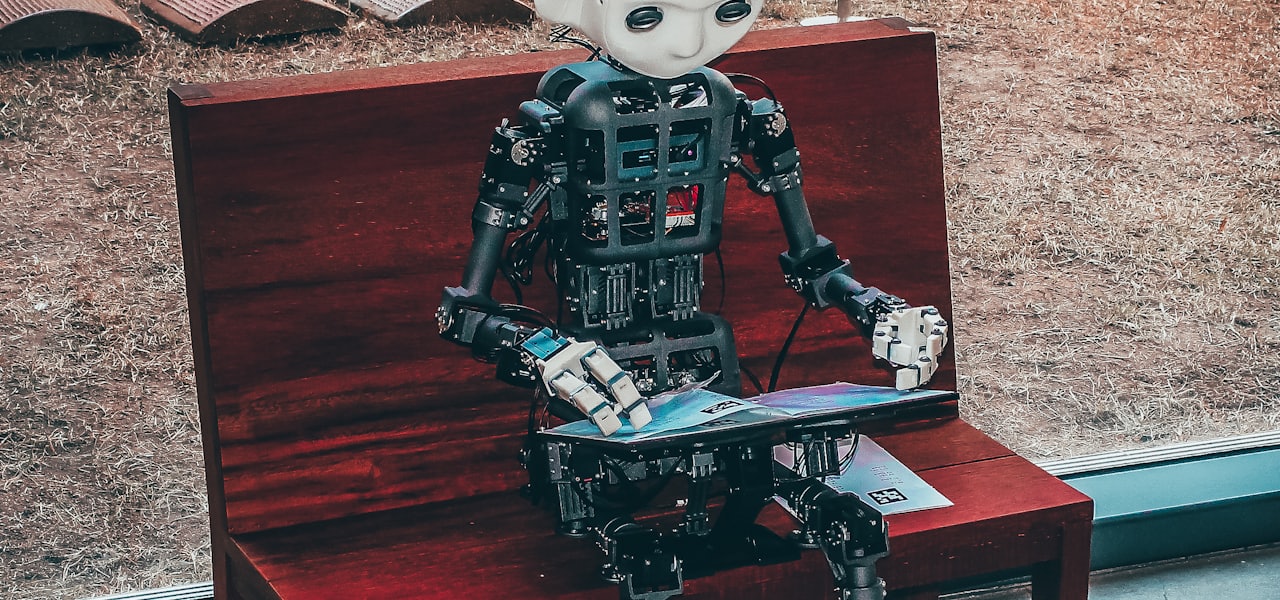
  • Use of artificial intelligence by the United States Department of Defense

    Use of artificial intelligence by the United States Department of Defense

    The United States Department of Defense has been analyzing and employing military applications of artificial intelligence since at least 2014. The program initially focused on drones and other robots, but has also been using large language models for military research and analysis. The current US policy on lethal autonomous weapons is Department of Defense Directive 3000.09, updated in January 2023. == Background == The United States Department of Defense began developing lethal autonomous weapons as early as the Reagan administration. An early version of the Tomahawk missile could have been used to destroy Soviet ships without direct human control; the initiative was abandoned after the United States and the Soviet Union signed START I. By 2014, the United Kingdom, Israel, and Norway had already begun using missiles equipped with artificial intelligence systems. The Department of Defense established a policy on the use of artificial intelligence in 2012. == History == === 2016–2017: Carter secretaryship === In May 2016, secretary of defense Ash Carter stated that his Third Offset strategy would include utilizing artificial intelligence as a military advantage. The New York Times reported that year that the Department of Defense had tested an autonomous drone at an approximation of a Middle Eastern village at Camp Edwards. Deputy secretary of defense Robert O. Work, who advocated for developing artificial intelligence, told the Times that the United States needed to compete with China and Russia by having a tactical advantage they could not easily replicate. The initiative was developed by DARPA beginning in 2015. The use of artificial intelligence in the U.S. military was controversial within the department; in February, Paul Scharre, who worked for the Office of the Secretary of Defense in the secretaryships of Robert Gates and Leon Panetta, published a report about the risks of artificial intelligence for broad military applications. === 2017–2019: Mattis secretaryship === By 2017, the United States Air Force had already begun using artificial intelligence in military robots. The Air Force's use of Neurala, an artificial intelligence company, concerned officials in the Department of Defense after an investigation found that Neurala had accepted money from an investment firm with funding from a state-run Chinese company. The Department of Defense began heavily investing in artificial intelligence after Work established Project Maven, an initiative to encourage the development and integration of artificial intelligence in the military, in April 2017. In May 2018, secretary of defense Jim Mattis privately expressed to president Donald Trump that he needed to establish a national strategy on artificial intelligence, quoting an article from former secretary of state Henry Kissinger that called for a presidential commission on the technology. The Department of Defense established the Joint Artificial Intelligence Center the following month. Google began working with the Department of Defense on analyzing drone footage as early as March. Google's involvement in the initiative led to protests from employees and mass resignations. Seeking to quell internal unrest, Google stated it would not renew its contract with the Department of Defense in June. The Department of Defense announced an artificial intelligence contract with Microsoft in October. === 2025–present: Hegseth secretaryship === In December 2025, secretary of defense Pete Hegseth announced GenAI.mil, an artificial intelligence platform for the Department of Defense. In a video announcing the platform, Hegseth stated that Department of Defense workers would be able to "conduct deep research, format documents and even analyze video or imagery." The Department of Defense contracted first Gemini by Google, then ChatGPT by OpenAI, and finally Grok by xAI for the platform. Claude by Anthropic was also contracted by the Department of Defense and was in use on secure servers until it was revealed that Claude had been used in the 2026 operation to capture Nicolás Maduro, who was at the time the leader of Venezuela. This revelation sparked a high-profile dispute over Anthropic's ability to constrain Claude's useage, resulting in the termination of Anthropic's $200 million defense contract. The Department of Defense also moved to label Anthropic a supply chain risk, which was later blocked by a federal judge.

    Read more →
  • DialogOS

    DialogOS

    DialogOS is a graphical programming environment to design computer system which can converse through voice with the user. Dialogs are clicked together in a Flowchart. DialogOS includes bindings to control Lego Mindstorms robots by voice and has bindings to SQL databases, as well as a generic plugin architecture to integrate with other types of backends. DialogOS is used in computer science courses in schools and universities to teach programming and to introduce beginners in the basic principles of human/computer interaction and dialog design. It has also been used in research systems. DialogOS was initially developed commercially by CLT Sprachtechnologie GmbH until its liquidation in 2017. The rights were then acquired by Saarland University and the software was released as open-source. == Bindings to Lego Mindstorms NXT == DialogOS can control the LEGO Mindstorms NXT Series. It uses sensor-nodes to obtain values for the following sensors: noise sensor ultrasonic sensor touch sensor luminosity sensor

    Read more →
  • Character computing

    Character computing

    Character computing is a trans-disciplinary field of research at the intersection of computer science and psychology. It is any computing that incorporates the human character within its context. Character is defined as all features or characteristics defining an individual and guiding their behavior in a specific situation. It consists of stable trait markers (e.g., personality, background, history, socio-economic embeddings, culture,...) and variable state markers (emotions, health, cognitive state, ...). Character computing aims at providing a holistic psychologically driven model of human behavior. It models and predicts behavior based on the relationships between a situation and character. Three main research modules fall under the umbrella of character computing: character sensing and profiling, character-aware adaptive systems, and artificial characters. == Overview == Character computing can be viewed as an extension of the well-established field of affective computing. Based on the foundations of the different psychology branches, it advocates defining behavior as a compound attribute that is not driven by either personality, emotions, situation or cognition alone. It rather defines behavior as a function of everything that makes up an individual i.e., their character and the situation they are in. Affective computing aims at allowing machines to understand and translate the non-verbal cues of individuals into affect. Accordingly, character computing aims at understanding the character attributes of an individual and the situation to translate it to predicted behavior, and vice versa. ''In practical terms, depending on the application context, character computing is a branch of research that deals with the design of systems and interfaces that can observe, sense, predict, adapt to, affect, understand, or simulate the following: character based on behavior and situation, behavior based on character and situation, or situation based on character and behavior.'' The Character-Behavior-Situation (CBS) triad is at the core of character computing and defines each of the three edges based on the other two. Character computing relies on simultaneous development from a computational and psychological perspective and is intended to be used by researchers in both fields. Its main concept is aligning the computational model of character computing with empirical results from in-lab and in-the-wild psychology experiments. The model is to be continuously built and validated through the emergence of new data. Similar to affective and personality computing, the model is to be used as a base for different applications towards improving user experience. == History == Character computing as such was first coined in its first workshop in 2017. Since then it has had 3 international workshops and numerous publications. Despite its young age, it has already drawn some interest in the research community, leading to the publication of the first book under the same title in early 2020 published by Springer Nature. Research that can be categorized under the field dates much older than 2017. The notion of combining several factors towards the explanation of behavior or traits and states has long been investigated in both Psychology and Computer Science, for example. == Character == The word character originates from the Greek word meaning “stamping tool”, referring to distinctive features and traits. Over the years it has been given many different connotations, like the moral character in philosophy, the temperament in psychology, a person in literature or an avatar in various virtual worlds, including video games. According to character computing character is a unification of all the previous definitions, by referring back to the original meaning of the word. Character is defined as the holistic concept representing all interacting trait and state markers that distinguish an individual. Traits are characteristics that mainly remain stable over time. Traits include personality, affect, socio-demographics, and general health. States are characteristics that vary in short periods of time. They include emotions, well-being, health, cognitive state. Each characteristic has many representation methods and psychological models. The different models can be combined or one model can be preset for each characteristic. This depends on the use-case and the design choices. == Areas == Research into character computing can be divided into three areas, which complement each other but can each be investigated separately. The first area is sensing and predicting character states and traits or ensuing behavior. The second area is adapting applications to certain character states or traits and the behavior they predict. It also deals with trying to change or monitor such behavior. The final area deals with creating artificial agents e.g., chatbots or virtual reality avatars that exhibit certain characteristics. The three areas are investigated separately and build on existing findings in the literature. The results of each of the three areas can also be used as a stepping stone for the next area. Each of the three areas has already been investigated on its own in different research fields with focus on different subsets of character. For example, affective computing and personality computing both cover different areas with a focus on some character components without the others to account for human behavior. == The Character-Behavior-Situation triad == Character computing is based on a holistic psychologically driven model of human behavior. Human behavior is modeled and predicted based on the relationships between a situation and a human's character. To further define character in a more formal or holistic manner, we represent it in light of the Character–Behavior–Situation triad. This highlights that character not only determines who we are but how we are, i.e., how we behave. The triad investigated in Personality Psychology is extended through character computing to the Character–Behavior–Situation triad. Any member of the CBS triad is a function of the two other members, e.g., given the situation and personality, the behavior can be predicted. Each of the components in the triad can be further decomposed into smaller units and features that may best represent the human's behavior or character in a particular situation. Character is thus behind a person's behavior in any given situation. While this is a causality relation, the correlation between the three components is often more easily used to predict the components that are most difficult to measure from those measured more easily. There are infinitely many components to include in the representation of any of C, B, and S. The challenge is always to choose the smallest subset needed for prediction of a person's behavior in a particular situation.

    Read more →
  • DARPA Prize Competitions

    DARPA Prize Competitions

    Over the years, the U.S. Defense Advanced Research Projects Agency (DARPA) has conducted numerous prize competitions to spur innovation. A prize competition allows DARPA to establish an ambitious goal, opening the door to novel approaches from the public that might otherwise appear too risky for experts in a particular field to pursue. == Statutory authorities == In 1999, Congress provided prize competition authority to DARPA in the National Defense Authorization Act for Fiscal Year 2000 (P.L. 106–65), 10 U.S.C. § 4025, formerly 10 U.S.C. §2374a. DARPA also conducts prize competitions under the America COMPETES Act, 15 U.S.C. § 3719. == Recent prize competitions == DARPA Grand Challenge (2004 and 2005) was a prize competition to spur the development of autonomous vehicle technologies. The $1 million prize went unclaimed as no vehicles could complete the challenging desert route from Barstow, CA, to Primm, NV, on March 13, 2004. A year later, on October 8, 2005, the Stanford Racing Team won the $2 million prize during the second competition of the Grand Challenge in the desert Southwest near the California/Nevada state line. DARPA Urban Challenge (2007) required the competitors to build an autonomous vehicle capable of driving in traffic and performing complex maneuvers such as merging, passing, parking, and negotiating intersections. On November 3, 2007, the Carnegie Mellon Team won the $2 million prize, and its vehicle became the first autonomous vehicle that interacted with both manned and unmanned vehicle traffic in an urban environment. DARPA Network Challenge (Red Balloon Challenge) (2009) explored the roles that the Internet and social networking play in solving broad-scope, time-critical problems. On December 5, 2009, the Massachusetts Institute of Technology team won $40,000 by locating the ten moored, eight-foot, red weather balloons at ten places in the United States within seven hours. DARPA Digital Manufacturing Analysis, Correlation and Estimation Challenge (DMACE) (2010) was a three-month contest to showcase the potential of digital manufacturing of advanced materials. The University of California at Santa Barbara team won a $50,000 prize for crushing 180 digitally manufactured (DM) titanium mesh spheres with the most accurate predictive model of the components’ properties. DARPA Shredder Challenge (2011) was to identify and assess potential capabilities and vulnerabilities to sensitive information in the national security community. Participating teams must download the images of the documents shredded into more than 10,000 pieces from the Challenge website, reconstruct the documents, and solve the five puzzles. Of almost 9,000 teams, the San Francisco-based All Your Shreds Are Belong to U.S team won the $50,000 prize. DARPA UAVForge Challenge (2011-2012) aimed to build and test a user-intuitive, backpack-portable unmanned aerial vehicle (UAV) that could quietly fly in and out of critical environments to conduct sustained surveillance for up to three hours. The $100,000 prize was not claimed because none of the 140 teams met the technical matrix. DARPA Cash for Locating & Identifying Quick Response Codes (CLIQR) Quest Challenge (2012) explored the role the Internet and social media played in the timely communication, wide-area team-building, and urgent mobilization required to solve broad scope, time-critical problems. The challenge offered $40,000 to the first individual or team that could locate seven posters appearing in U.S. cities bearing the DARPA logo and a quick response code (QR) within 15 days. No team found and submitted all seven codes. DARPA Fast Adaptable Next-Generation Ground Vehicle (FANG) Challenge (2012-2013) was to use three competitions for the design of an infantry fighting vehicle, culminating in prototypes. In April 2013, DARPA awarded US$1 million to a three-man team during the first competition. DARPA decided not to proceed with the second and third competitions as originally planned and transitioned the technologies to the defense and commercial industry through the Digital Manufacturing and Design Innovation Institute (DMDII). DARPA Spectrum Challenge (2013-2014) sought to demonstrate how a software-defined radio can use a given communication channel in the presence of other users and interfering signals. Three teams emerged as the overall winners, winning a total of $150,000 in prizes. DARPA Chikungunya (CHIKV) Challenge (2014-2015) was a health-related effort to develop the most accurate predictions of CHIKV cases for all Western Hemisphere countries and territories between September 2014 and March 2015. On May 12, 2015, DARPA awarded $500,000 in prizes to the 11 winners of the competition during a scientific review DARPA Robotics Challenge (DRC) (2013-2015) aimed to develop semi-autonomous ground robots that could do "complex tasks in dangerous, degraded, human-engineered environments." A South Korean team won the first prize of $2 million, and two U.S. teams won $1 million and $500,000 as second and third winners. DARPA Cyber Grand Challenge (CGC) (2014 - 2016) was to “create automatic defensive systems capable of reasoning about flaws, formulating patches and deploying them on a network in real time.” The top three winners were awarded prizes of $2 million, $1 million, and $750,000, respectively. DARPA Spectrum Collaboration Challenge (SC2) (2016-2019) aimed to encourage the development of AI-enabled wireless networks to “ensure that the exponentially growing number of military and civilian wireless devices would have full access to the increasingly crowded electromagnetic spectrum.” A team from the University of Florida won the overall top prize of US$2 million at the final SC2 competition. DARPA Subterranean (SubT) Challenge (2017-2021) was to develop robotic technologies to map, navigate, search and exploit complex underground environments. The first-place winners of the system final competition and of the virtual final competition were awarded $2 million and $750,000, respectively, with multiple prizes awarded to the second and third-place winners. DARPA Launch Challenge (2018-2020) was a $12 million satellite launch challenge to demonstrate responsive and flexible space launch capabilities from the small launch providers and was to culminate in two separate launch competitions where the competitors must launch a satellite to low Earth orbit (LEO) within days of each other at different locations in the United States. The competition ended without a winner. DARPA Forecasting Floats in Turbulence (FFT) Challenge (2021) was to spur technologies that could predict the location of sea drifters or floats within 10 days. DARPA awarded $25,000 for first place, with prizes of $15,000 and $10,000 for second place and third place. DARPA Artificial Intelligence Cyber Challenge (AIxCC) (2023–2025) was a two-year challenge and asks competitors to design novel AI systems to secure critical software code on which Americans rely. The total prize money is $29.5 million. In March 2024, the Advanced Research Projects Agency for Health (ARPA-H) partnered with DARPA, contributing an additional $20 million to the competition's prize pool to address software vulnerabilities in medical devices, hospital IT, and biotech equipment. AIxCC collaborates with Google, Microsoft, OpenAI, Anthropic, Linux Foundation, Open Source Security Foundation, Black Hat USA, and DEF CON, all of which provide AIxCC with access to large language models. In August 2024, AIxCC held the semifinal at DEF CON in Las Vegas. DARPA and ARPA-H tested all 42 submissions by running them through various open-source coding projects with deliberately injected vulnerabilities and scored the tools based on their effectiveness in identifying and fixing security flaws. Seven teams, each winning $2 million in the semifinals, competed in the final round of the AIxCC at the August 2025 DEF CON conference. Team Atlanta won first place with a $4 million prize for its cyber reasoning systems, which identified and patched vulnerabilities across 54 million lines of code. DARPA Triage Challenge (2023 – 2026) aims to spur the development of novel physiological features for medical triage, with a total prize money of $7 million. In October 2024, Challenge Event 1 was held in Perry, Georgia, featuring to-scale replicas of disaster sites such as an airplane crash and Hurricane Katrina, and teams competed based on how closely their data aligned with the agency’s official data and how quickly and accurately their autonomous systems could identify individuals most urgently in need of medical care. DARPA concluded the second year of competitions and, in November 2025, named the top performers in systems and data categories, which will advance to the final 2026 competition. The DARPA Lift Challenge (2025-2026) is for participants to design unmanned aerial systems capable of carrying up to four times their own weight, with a minimum payload of 110 pounds. Acco

    Read more →
  • Full Dive

    Full Dive

    Full Dive, short for Full Dive: This Ultimate Next-Gen Full Dive RPG Is Even Shittier than Real Life! (Japanese: 究極進化したフルダイブRPGが現実よりもクソゲーだったら, Hepburn: Kyūkyoku Shinka shita Furu Daibu RPG ga Genjitsu yori mo Kusogē Dattara), is a Japanese light novel series written by Light Tuchihi and illustrated by Youta. Media Factory has published four volumes since August 2020 under their MF Bunko J imprint. A manga adaptation with art by Kino was serialized in Media Factory's seinen manga magazine Monthly Comic Alive from January 2021 to January 2022. An anime television series adaptation by ENGI aired from April to June 2021. == Plot == Hiroshi Yuki, with the player name of Hiro, is a high school boy who loves to play virtual reality MMORPGs (VRMMORPG) in order to escape reality. When a game store manager named Reona Kisaragi tricks him into buying the game Kiwame Quest, he soon discovers that it is not what it seems. Unlike regular games, it is a game that tries to pursue realism to a fanatical point. As such, Hiroshi struggles to eke out a niche. Despite the disadvantages, he is determined to complete the game. == Characters == === Main characters === Hiroshi Yuki (結城宏, Yūki Hiroshi) Voiced by: Daiki Yamashita, Riho Sugiyama (young) (Japanese); Johnny Yong Bosch, Michele Knotz (young) (English) Hiroshi is a high school student who is tricked into buying Kiwame Quest by game store manager, Reona Kisaragi. He is a former member of the track team who quit following an unfortunate incident and he likes to play VRMMORPGs in order to escape reality. His player name is Hiro. Reona Kisaragi (如月玲於奈, Kisaragi Reona) Voiced by: Ayana Taketatsu (Japanese); Natalie Van Sistine (English) Reona is a game store manager who tricks Hiroshi into buying Kiwame Quest. She likes to tease him and her in-game avatar is that of a fairy. Alicia (アリシア, Arishia) Voiced by: Fairouz Ai (Japanese); Kayli Mills (English) Alicia is one of Hiroshi's childhood friends in Kiwame Quest. She has an older brother named Martin in-game. Mizarisa (ミザリサ) Voiced by: Shiori Izawa (Japanese); Sarah Anne Williams (English) Mizarisa is the town inquisitor in Kiwame Quest. Kaede Yuki (結城楓, Yūki Kaede) Voiced by: Aoi Koga (Japanese); Kate Bristol (English) Kaede is Hiroshi's younger sister. She used to look up to her older brother, but their relationship has been strained ever since he quit the track team. === NPCs === Martin (マーチン, Māchin) Voiced by: Haruki Ishiya, Natsumi Fujiwara (young) (Japanese); Ben Lepley, Krystal LaPorte (young) (English) Martin is one of Hiroshi's childhood friends in Kiwame Quest. He is also Alicia's older brother in-game. Tesla (テスラ, Tesura) Voiced by: Satoshi Hino (Japanese); Jason Liebrecht (English) Tesla is the captain of the City Guard in Kiwame Quest. Govern (ガバン, Gaban) Voiced by: Shizuka Itō (Japanese); Lisa Ortiz (English) Govern is the queen of Ted in Kiwame Quest. === Other characters === Ginji (ギンジ) Voiced by: Katsuyuki Konishi (Japanese); Brent Mukai (English) Ginji is a veteran player of Kiwame Quest. Soichiro Kamui (神居宗一郎, Kamui Sōichirō) Voiced by: Yoshitsugu Matsuoka (Japanese); Samuel Drake (English) Kamui is the only known player who has successfully completed Kiwame Quest. == Media == === Light novels === Light Tuchihi launched the light novel series, with illustrations by Youta, under Media Factory's MF Bunko J label on August 25, 2020. ==== Volumes ==== === Manga === A manga adaptation by Kino was serialized in Media Factory's Monthly Comic Alive magazine from January 27, 2021, to January 27, 2022. Two tankōbon volumes were released from May 21, 2021, to January 21, 2022. ==== Volumes ==== === Anime === An anime television series adaptation was announced on December 4, 2020. The series was animated by ENGI and directed by Kazuya Miura, with Kenta Ihara writing the series' scripts, and Yūta Kevin Kenmotsu designing the characters. It ran from April 7 to June 23, 2021, on AT-X, Tokyo MX, SUN, KBS Kyoto, and BS11. Mayu Maeshima performed the opening theme "Answer", while Ayana Taketatsu, Fairouz Ai, Shiori Izawa, and Aoi Koga performed the ending theme "Kisuida!". It ran for 12 episodes. Funimation licensed and streamed the series. On June 8, 2021, Funimation announced that the series would receive an English dub, which premiered the following day. Following Sony's acquisition of Crunchyroll, the series was moved to Crunchyroll. ==== Episodes ====

    Read more →
  • Land of Memories

    Land of Memories

    Land of Memories (Chinese: 机忆之地) is a Chinese science-fiction novel by Shen Yang (沈阳), a professor at Tsinghua University's School of Journalism and Communication. The story revolves around a former neuroscientist trying to recover her memories from the metaverse after suffering amnesia due to an accident. It contains almost 6,000 Chinese characters and was shortened from an AI-generated draft that was 43,000 characters long. The process involved 66 prompts spanning almost three hours. The novel was among 18 submissions that won the level-two prize at the Fifth Jiangsu Youth Science Education and Science Fiction Competition (第五届江苏省青年科普科幻作品大赛). The contest was restricted to participants between the age of 14 and 45 but did not forbid entries generated by AI. One of its organizers reached out to Shen after finding out that the professor had been experimenting with writing science fiction using AI. The judges were not told about the novel's origin in advance. Three of them, out of the six, approved the work. One judge, who had worked with AI models before, recognized that the novel was written by AI and criticized the work for lacking emotional appeal. The organizer who had contacted Shen said the novel's introduction was not bad but the story did not develop well. It would not meet the usual standards for publication. However, he still plans to allow AI-generated submissions in 2024. Fu Ruchu, editorial department director of the People's Literature Publishing House, said the novel was not easily identifiable as AI-generated and applauded its logical consistency. She warned that artificial intelligence could endanger the jobs of fiction writers and cause permanent damage to literary language.

    Read more →
  • List of security hacking incidents

    List of security hacking incidents

    This list of security hacking incidents covers important or noteworthy events in the history of security hacking and cracking. == 1900 == === 1903 === Magician and inventor Nevil Maskelyne disrupts John Ambrose Fleming's public demonstration of Guglielmo Marconi's purportedly secure wireless telegraphy technology, sending insulting Morse code messages through the auditorium's projector. == 1930s == === 1932 === Polish cryptologists Marian Rejewski, Henryk Zygalski and Jerzy Różycki broke the Enigma machine code. === 1939 === Alan Turing, Gordon Welchman and Harold Keen worked together to develop the codebreaking device Bombe (based off of Rejewski's work on Bomba). The Enigma machine's use of a reliably small key space makes it vulnerable to brute force attacks. == 1940s == === 1943 === René Carmille, comptroller general of the Vichy French Army, hacked the punch card system used by the Nazis to locate Jews. === 1949 === The theory that underlies computer viruses was first made public in 1949, when computer pioneer John von Neumann presented a paper titled "Theory and Organization of Complicated Automata". In the paper, von Neumann speculated that computer programs could reproduce themselves. == 1950s == === 1955 === At MIT, "hack" first came to mean playing with machines. An April 1955 meeting of the Tech Model Railroad Club has one say that "Mr. Eccles requests that anyone working or hacking on the electrical system turn the power off to avoid fuse blowing." === 1957 === Joe "Joybubbles" Engressia, a blind seven-year-old boy with perfect pitch, discovered that whistling the fourth E above middle C (a frequency of 2600 Hz) would interfere with AT&T's automated telephone systems, thereby inadvertently opening the door for phreaking. == 1960s == Various phreaking boxes are used to interact with automated telephone systems. === 1963 === The first ever reference to malicious hacking is 'phreaking' in MIT's student newspaper, The Tech, containing hackers tying up the lines with Harvard, configuring the PDP-1 to make free calls, war dialing and accumulating large phone bills. === 1965 === William D. Mathews from MIT finds a vulnerability in a CTSS running on an IBM 7094. The standard text editor on the system was designed to be used by one user at a time, working in one directory, and so it created a temporary file with a constant name for all instances of the editor. The flaw was discovered when two system programmers were editing at the same time and the temporary files for the message of the day and the password file became swapped, causing the contents of the system CTSS password file to display to any user logging into the system. === 1967 === The first known incidence of network penetration hacking took place when members of a computer club at a suburban Chicago high school were provided access to IBM's APL network. In the fall of 1967, IBM (through Science Research Associates) approached Evanston Township High School with the offer of four 2741 Selectric teletypewriter-based terminals with dial-up modem connectivity to an experimental computer system which implemented an early version of the APL programming language. The APL network system was structured into workspaces which were assigned to various clients using the system. Working independently, the students quickly learned the language and the system. They were free to explore the system, often using existing code available in public workspaces as models for their own creations. Eventually, curiosity drove the students to explore the system's wider context. This first informal network penetration effort was later acknowledged as helping harden the security of one of the first publicly accessible networks:Science Research Associates undertook to write a full APL system for the IBM 1500. They modeled their system after APL/360, which had by that time been developed and seen substantial use inside of IBM, using code borrowed from MAT/1500 where possible. In their documentation, they acknowledge their gratitude to "a number of high school students for their compulsion to bomb the system". This was an early example of a kind of sportive, but very effective, debugging that was often repeated in the evolution of APL systems. == 1970s == === 1971 === John T. Draper (later nicknamed Captain Crunch), his friend Joe Engressia (also known as Joybubbles), and blue box phone phreaking hit the news with an Esquire magazine feature story. === 1979 === Kevin Mitnick breaks into his first major computer system, the Ark, which was the computer system Digital Equipment Corporation (DEC) used for developing their RSTS/E operating system software. == 1980s == === 1980 === The FBI investigates a breach of security at National CSS (NCSS). The New York Times, reporting on the incident in 1981, describes hackers as: Technical experts, skilled, often young, computer programmers who almost whimsically probe the defenses of a computer system, searching out the limits and the possibilities of the machine. Despite their seemingly subversive role, hackers are a recognized asset in the computer industry, often highly prized. The newspaper describes white hat activities as part of a "mischievous but perversely positive 'hacker' tradition". When a National CSS employee revealed the existence of his password cracker, which he had used on customer accounts, the company chastised him not for writing the software but for not disclosing it sooner. The letter of reprimand stated that "The Company realizes the benefit to NCSS and in fact encourages the efforts of employees to identify security weaknesses to the VP, the directory, and other sensitive software in files". === 1981 === Chaos Computer Club forms in Germany. Ian Murphy, aka Captain Zap, was the first cracker to be tried and convicted as a felon. Murphy broke into AT&T's computers in 1981 and changed the internal clocks that metered billing rates. People were getting late-night discount rates when they called at midday. Of course, the bargain-seekers who waited until midnight to call long distance were hit with high bills. === 1983 === The 414s break into 60 computer systems at institutions ranging from the Los Alamos National Laboratory to Manhattan's Memorial Sloan-Kettering Cancer Center. The incident appeared as the cover story of Newsweek with the title "Beware: Hackers at play". As a result, the U.S. House of Representatives held hearings on computer security and passed several laws. The group KILOBAUD is formed in February, kicking off a series of other hacker groups that formed soon after. The movie WarGames introduces the wider public to the phenomenon of hacking and creates a degree of mass paranoia about hackers and their supposed abilities to bring the world to a screeching halt by launching nuclear ICBMs. The U.S. House of Representatives begins hearings on computer security hacking. In his Turing Award lecture, Ken Thompson mentions "hacking" and describes a security exploit that he calls a "Trojan horse". === 1984 === Someone calling himself Lex Luthor founds the Legion of Doom. Named after a Saturday morning cartoon, the LOD had the reputation of attracting "the best of the best"—until one of the most talented members called Phiber Optik feuded with Legion of Doomer Erik Bloodaxe and got 'tossed out of the clubhouse'. Phiber's friends formed a rival group, the Masters of Deception. The Comprehensive Crime Control Act gives the Secret Service jurisdiction over computer fraud. The Cult of the Dead Cow forms in Lubbock, Texas, and begins publishing its underground ezine. The hacker magazine 2600 begins regular publication, right when TAP was putting out its final issue. The editor of 2600, "Emmanuel Goldstein" (whose real name is Eric Corley), takes his handle from the leader of the resistance in George Orwell's Nineteen Eighty-Four. The publication provides tips for would-be hackers and phone phreaks, as well as commentary on the hacker issues of the day. Today, copies of 2600 are sold at most large retail bookstores. The Chaos Communication Congress, the annual European hacker conference organized by the Chaos Computer Club, is held in Hamburg, Germany. William Gibson's groundbreaking science fiction novel Neuromancer, about "Case", a futuristic computer hacker, is published. Considered the first major cyberpunk novel, it brought into hacker jargon such terms as "cyberspace", "the matrix", "simstim", and "ICE". === 1985 === KILOBAUD is re-organized into P.H.I.R.M. and begins sysopping hundreds of bulletin board systems (BBSs) throughout the United States, Canada, and Europe. The online 'zine Phrack is established. The Hacker's Handbook is published in the UK. The FBI, Secret Service, Middlesex County NJ Prosecutor's Office and various local law enforcement agencies execute seven search warrants concurrently across New Jersey on July 12, 1985, seizing equipment from BBS operators and users alike for "complicity in computer theft", under a n

    Read more →
  • Gundam Build Divers Re:Rise

    Gundam Build Divers Re:Rise

    Gundam Build Divers Re:Rise (Japanese: ガンダムビルドダイバーズRe:RISE, Hepburn: Gandamu Birudo Daibāzu Re:Raizu) is a Japanese original net animation anime series produced by Sunrise Beyond, and the fourth series within the Gundam Build Series sub-series. A sequel to the 2018 anime Gundam Build Divers, it is the first Gundam anime series to be released in the Reiwa period, released to celebrate the franchise's 40th anniversary. The series is directed by Shinya Watada and written by Yasuyuki Muto. Initially announced at the Gundam 40th anniversary video, the series aired on its Gundam Channel YouTube channel from October 10 to December 26, 2019. A TV airing of the ONA began on BS11 on October 12, 2019, and on January 28, 2020, on Tokyo MX. A second season aired from April 9 to August 27, 2020. Two spinoffs of the series were later serialized in Kadokawa's Gundam Ace magazine and Hobby Japan. == Plot == Two years have passed since the EL-Diver Incident, an event that almost destroyed the Gunpla Battle Nexus Online (GBN) game until it was resolved by the force group known as "Build Divers", and soon after more EL-Divers were discovered. In order to make the game more secure, a newer version of the game was rolled out in order to prevent the same incident from happening again and with newer experiences that would make the gameplay more immersive to players. The story focuses on Hiroto Kuga, a high schooler who is a rogue mercenary Gunpla Diver in GBN, who goes in the game and wanders throughout its countless dimensions while helping out other Divers whether it is on insistence or by hire. Despite his selfless act, he chooses to remain unaffiliated with anyone and refuses rewards and Force (Diver parties) group invites, isolating himself from other people even in real life. His primary goal as a Diver is to be reunited with a mysterious girl from his past named Eve, who was in fact the very first EL-Diver to appear in the game. But after a special request mission, Hiroto is united with three other active Divers in a strange world named "Eldora" and forms the Force group "BUILD DiVERS" in what appears to be just another GBN gamespace event, until they learn the truth about Eldora and its consequences not only for GBN, but for the entire world. == Characters == === BUILD DiVERS === Hiroto Kuga (クガ・ヒロト, Kuga Hiroto) / Hiroto (ヒロト, Hiroto) Voiced by: Chiaki Kobayashi (Japanese); Billy Kametz (English) The main protagonist of the series and a high-school builder, veteran diver, and a former ace member of the Force group Avalon, who lives in Yokohama. He was one of the first minors to make it to the deep end of GBN, due to his conviction of being a person who does his best to help others. He was active prior and during the events of the previous series. Now working as a rogue diver for hire after leaving Avalon, he wanders the GBN gamespace alone, harboring regrets, resentments, and suffering from trauma after the death of his close friend and lover, the EL-Diver Eve. He is very calm and a man of few words, usually refusing others' reward and help, especially on joining other forces, but this stoic persona is a mental mask to hide his condition from everyone, including his parents. But when a special mission done by Freddie united him with Kazami, May and Parviz, they accidentally formed the force team named "BUILD DiVERS" to protect the Eldorans from the One-Eyes army. Currently he is the ace of his unit and the leader of the overall force. Hiroto uses the PFF-X7 Core Gundam as his main Gunpla, based on the RX-78-2 Gundam from the original Mobile Suit Gundam series. Its special armament system called the "core-change" gimmick and his first theme invented from that gimmick is the "Planets System". This allows the Core Gundam to be equipped with various types of armor and weapons, each for a different situation named after the eight planets. Hiroto later upgrades his Gunpla into the PFF-X7II Core Gundam II. This new Core Gundam can transform into the "Core Flyer", in a similar fashion to the original Gundam's FF-X7 Core Fighter for increased mobility and like its predecessor, it can also use the Planets System: Earth Armor (PFF-X7/E3 Earthree Gundam): Core Gundam's default blue armor, focused on traditional all-around combat. Mars Armor (PFF-X7/M4 Marsfour Gundam): A red armor whose focus is on fragments of four styles of close combat, hence "Cross-Combat". Venus Armor (PFF-X7/V2 Veetwo Gundam): A green armor whose focus is commando style ranged and bombardment combat, additionally with option works. Mercury Armor (PFF-X7/M1 Mercuone Gundam): A navy armor whose focus is underwater combat. Jupiter Armor (PFF-X7/J5 Jupitive Gundam): A white armor whose focus is fast orbital combat. Uranus Armor (PFF-X7II/U7 Uraven Gundam): An indigo armor focused on reconnaissance and high powered sniping. Saturn Armor (PFF-X7II/S6 Saturnix Gundam): An orange armor focused in demolition style close combat without beam weapons, originally developed to counter Gundam Frames. Neptune Armor (PFF-X7II/N8 Nepteight Gundam): An aqua-green armor equipped with a customized Volture Lumiere system similar to the one from Mobile Suit Gundam SEED C.E. 73: Stargazer, intended to be used for traveling through GBN's space in a short amount of time, but was used for launching into orbit instead of maneuvering in deep space. It is ultimately discarded in Eldora's orbit due to the strain of leaving Eldora's gravitational field. Pluto Armor (PFF-X7II+/P9 Plutine Gundam): Appearing only on Gundam Build Metaverse, the black colored armor is used for close combat and dueling purposes with its color scheme reminiscent of that of EcoPla. PFF-X7II/BUILD DiVERS Re:Rising Gundam: A special combination of the Core Gundam II with the WoDom Pod + and parts from the Gundam Aegis Knight and the EX Valkylander, armed with two giant beam sabers, eight miracle wings born from Eve's blessings, and the "Grand Cross Cannon", Hiroto's first special move, made with the help of his team. In one occasion, Hiroto changes his avatar to a Haro to pilot the Mobile Builder Haro Loader to help with the repairs on Cuadorn by making a prosthetic wing out of gunpla parts. During the Gunpla Battle Royal, he pilots an unmodified ASW-G-08 Gundam Barbatos Lupus Rex from Mobile Suit Gundam: Iron-Blooded Orphans. In Battlelogue, it is revealed that he has made a second Core Gundam II that he leaves on Eldora with the colors of the Gundam MK-II Titan. Another variant of this Gunpla sports the old "Gundam G3" colors with his team's personal crest, which is most likely to represent Sarah since the color of her hair, eyes, and dress embody Hiroto's time with Eve before they joined Avalon and to symbolize how he has officially befriended the original Build Divers. Each of the two units have unique advancements, the Titan color specializes in ground and underwater combat and the G3 color specializes in aerial and space combat. May (メイ, Mei) Voiced by: Mai Fuchigami (Japanese); Lauren Landa (English) A seemingly late teens female diver who prefers to play solo, she is a very calm and no-nonsense girl whose interest is in battles alone. However, she is not a fan of those who engage their opponents head on and prefers to implement a strategic approach. She is mature and has a strong sense of justice, and can be impulsive rushing into situations, especially for those in danger. Later in the series, she is revealed to be one of the 87 EL-Divers, however she was not one of those who were saved after the EL-Diver incident two years ago, she was born shortly after. After she was born she was given her own Mobile Doll body similar to Sarah, that is when she first met her, Koichi, Tsukasa, and Nanami. During the Lotus Challenge Eldoran style rehearsal battle it is revealed that she, as a new sister of Sarah, addresses the latter as the older since Sarah is chronologically older, regardless of her maturity. In the final episode, she is revealed to have been born with the remnant data originating from Eve, the first born EL-Diver who Hiroto befriended and fell in love with several years ago, and carries Eve's earring on her armband. In Battlelogue, it's implied that she is currently living with Hiroto IRL and in GBN is his attendant. May uses the JMA0530-MAY WoDom Pod as her main Gunpla, which is a customized JMA-0530 Walking Dome from Turn A Gundam. In the later episodes, the mobile suit is revealed to be a disguise for its true form, the HER-SELF Mobile Doll May. May later upgrades her WoDom Pod into the JMA0530-MAYBD WoDom Pod +. During the Gunpla Battle Royal, she uses her Mobile Doll (albeit with a new color scheme and the Gundam Base logo) along with an unmodified NZ-999 II Neo Zeong mobile armor from Mobile Suit Gundam Narrative. Kazami Torimachi (トリマチ・カザミ, Torimachi Kazami) / Kazami (カザミ, Kazami) Voiced by: Masaaki Mizunaka (Japanese); Ray Chase (English) A diver who was a former member of the diver group "Mu Dish". He is a very energet

    Read more →
  • Shadowrun

    Shadowrun

    Shadowrun is a science fantasy tabletop role-playing game set in an alternate future in which cybernetics, magic and fantasy creatures co-exist. It combines genres of cyberpunk, urban fantasy, and crime, with occasional elements of conspiracy, horror, and detective fiction. From its inception in 1989, it has spawned a franchise that includes a series of novels, a collectible card game, two miniature-based tabletop wargames, and multiple video games. The title is taken from the game's main premise – a near-future world damaged by a massive magical event, where industrial espionage and corporate warfare runs rampant. A shadowrun – a successful data theft or physical break-in at a rival corporation or organization – is one of the main tools employed by both corporate rivals and underworld figures. Deckers (futuristic hackers) can tap into an immersive, three-dimensional cyberspace on such missions as they seek access, physical or remote, to the power structures of rival groups. They are opposed by rival deckers and lethal, potentially brain-destroying artificial intelligences called "Intrusion Countermeasures" (IC), while they are protected by street fighters and/or mercenaries, often with cyborg implants (called cyberware), magicians, and other exotic figures. Magic has also returned to the world after a series of plagues; dragons who can take human form have returned as well, and are commonly found in high positions of corporate power. == Publication history == Shadowrun was developed and published by FASA from 1989 until early 2001, when the company closed and Shadowrun was transferred to WizKids, a company founded by former FASA employees. Two years before its closure, FASA sold its videogame branch, FASA Interactive, to Microsoft corporation, keeping rights to publishing novels and pen and paper RPGs. Since then, digital rights to Shadowrun IP have belonged to Microsoft. WizKids licensed the RPG rights to Fantasy Productions, who were already publishing a German version, until WizKids was acquired by Topps in 2003. Catalyst Game Labs, a publishing imprint of InMediaRes Productions, licensed the rights from Topps to publish new products. WizKids itself produced an unsuccessful collectible action figure game based on the property, called Shadowrun Duels. A fifth edition of Shadowrun was announced in December 2012. A limited-edition softcover was sold at the Origins Game Fair in June 2013, and the PDF in July 2013. A hardcover was published in August 2013. Shadowrun Anarchy was published in October 2016 It is a simplified version of the ruleset which allows focus more on the narration than on the rules. The sixth edition, called Shadowrun, Sixth World, was announced on May 1, 2019 to coincide with the game's 30th anniversary, along with a new website at shadowrunsixthworld.com. The game was published on August 26, 2019. The mechanics for this new version are generally similar to those of fifth edition, with some rules reworked for what line developer Jason Hardy describes as streamlining. This new version also progressed the in-game year to 2080. Since 2004, Shadowrun Missions (SRM) has offered fans "living campaigns" that allow for persistent character advancement. SRM is broken down into seasons which are made up of up to 24 individual missions that can be played at home, with special missions available to play exclusively at conventions. Each SRM season develops an overarching plot focused on a specific city from the Shadowrun setting. Missions settings have included the divided city of Denver, the corporate city-state of Manhattan, the Seattle Metroplex city-state, the formerly walled-off wastelands of Chicago, and Neo-Tokyo. For Shadowrun, Sixth World missions returned to Seattle, with twenty-four missions set in 2081, right after Seattle declared independence from the UCAS. The current Shadowrun Missions setting is 2083 New Orleans. The Shadowrun role-playing game has spawned several properties, including Shadowrun: The Trading Card Game, eight video games, an action figure game (Shadowrun Duels), two magazines, an art book and more than 50 novels, starting with the Secrets of Power series which introduces some of the original characters of Shadowrun and provides an introduction to this fictional universe. In addition to the main rule book there have been over 100 published supplements including adventures and expansions to both the rules and the game settings. Catalyst Game Labs announced that 2013 would be "The Year of Shadowrun," and in addition to the release of Shadowrun fifth edition that it has collaborated with publishers on the following properties: Shadowrun: Crossfire, The Adventure Deck-building Game; Shadowrun: Sprawl Gangers, a tactical miniatures wargame; and Shadowrun: Hostile Takeover, a board game designed by Bryan C.P. Steele was planned for release in late 2014/early 2015. Catalyst had been in collaboration with Nordic Games and Cliffhanger Studios to create Shadowrun Chronicles: Boston Lockdown online RPG, however it was shuttered November 30, 2018, with the producers citing lack of funding and the end of the license terms for use of the IP. == Fictional universe == Shadowrun takes place several decades in the future (2050 in the first edition, currently 2088). The end of the Mesoamerican Long Count calendar ushered in the "Sixth World", with once-mythological beings (e.g. dragons) appearing and forms of magic suddenly emerging. Large numbers of humans have "Goblinized" into orks and trolls, while many human children are born as elves, dwarves, and even more exotic creatures. In North America, indigenous peoples discovered that their traditional ceremonies allow them to command powerful spirits, and rituals associated with a new Ghost Dance movement let them take control of much of the western U.S. and Canada, where they formed a federation of Native American Nations. Seattle remains under U.S. control by treaty as a city-state enclave, and most game materials are set there and assume campaigns will use it as their setting. In parallel with these magical developments, the setting's 21st century features technological and social developments associated with cyberpunk science fiction. Megacorporations control the lives of their employees and command their own armies; many of the largest have extraterritoriality, such as currently enjoyed by foreign heads of state. Technological advances make cyberware (mechanical replacement body parts) and bioware (augmented vat-grown body parts implanted in place of or in tandem with natural organs) common. The Computer Crash of 2029 led to the creation of the Matrix, a worldwide computer network that users interact with via direct neural interface. When conflicts arise, corporations, governments, organized crime syndicates, and even wealthy individuals subcontract their dirty work to specialists, who then perform "shadowruns" or missions undertaken by deniable assets without identities or those that wish to remain unknown. The most skilled of these specialists, called shadowrunners, have earned a reputation for getting the job done. They have developed a knack for staying alive, and prospering, in the world of Shadowrun. The Shadowrun world is cross-genre, incorporating elements of both cyberpunk and urban fantasy. Unlike in a purely cyberpunk game, in the Shadowrun world, magic exists and has "worked" since 2011. Among other things, this split humankind into subtypes, also known as metatypes/metahumans. Some of these metatypes take the form of common fantasy races. Likewise, some animals have turned into familiar monsters of past fantasy and lore and both monsters and human magicians have regained magical powers. By the second half of the 21st century, in the time the game is set, these events are accepted as commonplace. Man, machine, and magic exist in a world where the amazing is among the most common and technology has entered into every facet of human (and metahuman) life. === Races === Characters in Shadowrun can be humans, orks, trolls, elves, dwarves, as well as certain diverging subspecies (known as metavariants) such as gnomes, giants, dryads, etc. In the early days, when magic returned to the world, humans began to either change into, or give birth to, elf and dwarf infants, a phenomenon called Unexplained Genetic Expression (UGE). Later, some juvenile and adult humans "goblinized" into other races (mostly orks, but also some trolls). The term "metahuman" is used either to refer to humanity as a whole, including all races, or to refer specifically to non-human races, depending on context. The return of Halley's Comet brought even further variation in the form of changelings, who have variation atypical to their metatype or even species, such as electroreception. Two of the metahuman races, elves and orks, have fictional languages. Additionally, a virus known as the Human Meta-Human Vampiric Virus (HMHVV), with many variant strains, has been known to cause f

    Read more →
  • Privacy Lost

    Privacy Lost

    Privacy Lost is a 2023 short science fiction film directed by Peter Stoel and Robert Berger. It follows a family using augmented reality (AR) and artificial intelligence (AI) devices capable of reading emotional states, raising questions about privacy and manipulation. == Premise == Privacy Lost follows a family using AR glasses that capture and interpret emotions in real time. As the parents argue in a restaurant, their emotional states and even hidden feelings become visible through these glasses. An AI-driven waiter adapts its appearance for each family member, employing emotional data to influence their decisions. == Cast == Brian Kant as Waiter Michael Krass as Husband Estelle Levinson as Waitress Thor van der Linden as Scotty Carlijn van Ramshorst as Wife == Production == Filming took place at HeadQ Productions, a virtual studio located in Amsterdam. The creators sought to depict a near-future scenario in which real-time emotion analysis becomes part of daily interactions. The film was screened at the Augmented World Expo (AWE), where it was noted for its thematic focus on AI-driven manipulation and emotional tracking. The depiction of AR glasses and AI characters integrates modern visual effects to show how devices might analyze emotional responses in real time. It also depicts how AI-driven interactions could influence consumer decisions, pointing to concerns over potential misuse. == Themes == Privacy Lost focuses on the intersection of advanced AI capabilities and AR environments, showing how real-time emotional analysis can be leveraged for targeted persuasion. The film aims to highlight the social and ethical implications of emerging AR and AI technologies, underlining how establishing clear regulatory frameworks for them is necessary to protect individual privacy, govern the storage of emotion-based data, and prevent manipulative practices. Critics describe the film’s theme as dystopian and note that such a reality is unlikely to occur in the near future. However, despite the exaggerated scenario, the film emphasizes the importance of a responsible approach by developers toward emerging technologies.

    Read more →
  • AFNLP

    AFNLP

    AFNLP (Asian Federation of Natural Language Processing Associations) is the organization for coordinating the natural language processing related activities and events in the Asia-Pacific region. == Foundation == AFNLP was founded on 4 October 2000. == Member Associations == ALTA – Australasian Language Technology Association ANLP Japan Association of Natural Language Processing ROCLING Taiwan ROC Computational Linguistics Society SIG-KLC Korea SIG-Korean Language Computing of Korea Information Science Society == Existing Asian Initiatives == NLPRS: Natural Language Processing Pacific Rim Symposium IRAL: International Workshop on Information Retrieval with Asian Languages PACLING: Pacific Association for Computational Linguistics PACLIC: Pacific Asia Conference on Language, Information and Computation PRICAI: Pacific Rim International Conference on AI ICCPOL: International Conference on Computer Processing of Oriental Languages ROCLING: Research on Computational Linguistics Conference == Conferences == IJCNLP-04: The 1st International Joint Conference on Natural Language Processing in Hainan Island, China IJCNLP-05: The 2nd International Joint Conference on Natural Language Processing in Jeju Island, Korea IJCNLP-08: The 3rd International Joint Conference on Natural Language Processing in Hyderabad, India ACL-IJCNLP-2009: Joint Conference of the 47th Annual Meeting of the Association for Computational Linguistics (ACL) and 4th International Joint Conference on Natural Language Processing (IJCNLP) in Singapore IJNCLP-11: The 5th International Joint Conference on Natural Language Processing in Chiang Mai, Thailand

    Read more →
  • International Aerial Robotics Competition

    International Aerial Robotics Competition

    The International Aerial Robotics Competition (IARC) is a university-based robotics competition held on the campus of the Georgia Institute of Technology, currently hosted by RoboNation. Since 1991, collegiate teams with the backing of industry and government have fielded autonomous flying robots in an attempt to perform missions requiring robotic behaviors not previously exhibited by a flying machine. The term “aerial robotics” was coined by competition creator Robert Michelson in 1990 to describe a new class of small highly intelligent flying machines. Successive years of competition saw these aerial robots grow from vehicles that could barely maintain themselves in the air, to automatons which are self-stable, self-navigating, and able to interact with their environment. The goal of the competition has been to provide a reason for the state-of-the-art of aerial robotics to move forward. Challenges have been geared towards producing advances. From 1991 through 2009, six missions were proposed. Each involved fully autonomous robotic behavior undemonstrated at the time. In October 2013 a seventh mission was proposed. It was the first to involve interaction between aerial robots and multiple ground robots. In 2016, the competition and its creator were recognized during the Georgia legislative session in the form of a senate resolution as the longest running aerial robotics competition in the world. == History == === First mission === The initial mission to move a metallic disc from one side of an arena to the other was seen by many as almost impossible. The college teams improved their entries over the next two years when the competition saw its first autonomous takeoff, flight, and landing by a team from the Georgia Institute of Technology. In 1995, a team from Stanford University was able to acquire a single disk and move it from one side of the arena to the other in a fully autonomous flight—half. === Second mission === The competition mission was toughened and made less abstract by requiring teams to search for a toxic waste dump, map the location of partially buried randomly oriented toxic waste drums, identify the contents of each drum from the hazard labels on the outside of each drum, and bring a sample back from one of the drums. In 1996, a team from the Massachusetts Institute of Technology and Boston University, with backing from Draper Labs, created a small fully autonomous flying robot that repeatedly and correctly mapped the location of all five of the toxic waste drums, and correctly identified the contents of two from the air, completing approximately seventy five percent of the mission. The following year, an aerial robot developed by a team from Carnegie Mellon University completed the entire mission. === Third mission === The third mission began in 1998. It was a search and rescue mission requiring fully autonomous robots to take off, fly to a disaster area and search amid fires, broken water mains, clouds of toxic gas, and rubble. The scenario was recreated at the U.S. Department of Energy's Hazardous Material Management and Emergency Response (HAMMER) training facility. Because of the realism of the scenario, animatrons were used instead of human actors to simulate survivors incapable of extracting themselves from the disaster area. An aerial robot from Germany's Technische Universität Berlin was able to detect and avoid all of the obstacles, identify all the dead on the ground and the survivors (distinguishing between the two based on movement), and relay pictures of the survivors along with their locations back to first responders who would attempt a rescue. This mission was completed in 2000. === Fourth mission === The fourth mission was initiated in 2001. It involved three scenarios requiring the same autonomous behavior: a hostage rescue mission where a submarine 3 kilometers off the coast must send an aerial robot to find a coastal city, identify the embassy where hostages are being held, locate valid openings in the embassy building, enter (or send in a sensor probe/subvehicle) and relay pictures of the hostages 3 km to the submarine prior to mounting an amphibious assault on the embassy to free the hostages; the discovery of an ancient mausoleum where a virus had killed the archaeological team, who had radioed that an important and undocumented tapestry was hanging inside, with 15 minutes to send an autonomous aerial robot to find the mausoleum, enter it (or send in a sensor probe/subvehicle) and relay pictures of the tapestry back prior to the destruction of the mausoleum and its contents; and an explosion at a nuclear reactor facility where scientists must send in an aerial robot to find the operating reactor building, enter the building (or send in a sensor probe/subvehicle) and relay pictures of the control panels to determine if a melt-down is imminent. All three missions involved the same elements of ingress, locating, identification, entry, and relaying pictures within 15 minutes. It was conducted at the U.S. Army's Fort Benning Soldier Battle Lab using the McKenna MOUT (Military Operations on Urban Terrain) site. The fourth mission was completed in 2008 with 27 teams who had demonstrated each of the required aerial robotic behaviors, except being able to demonstrate these behaviors in under 15 minutes—a feat considered by the judges to be inevitable given more time, and therefore no longer a significant challenge. Thus the fourth mission was terminated, $80,000 in awards distributed, and the fifth mission established. === Fifth mission === The fifth mission picked up where the fourth mission left off by demonstrating the fully autonomous aerial robotic behaviors necessary to rapidly negotiate the confined internal spaces of a structure once it has been penetrated by an air vehicle. The nuclear reactor complex explosion scenario of the fourth mission was used as the backdrop for the fifth mission. The fifth mission required a fully autonomous aerial vehicle to penetrate the structure and negotiate the more complex interior space containing hallways, small rooms, obstacles, and dead ends in order to search for a designated target without the aid of global-positioning navigational aids, and relay pictures back to a monitoring station some distance from the structure. The First Symposium on Indoor Flight Issues was held in conjunction with this 2009 IARC event. === Sixth mission === The sixth mission began in 2010 as an extension of the fifth mission theme of autonomous indoor flight behavior, however it demanded more advanced behaviors than were possible by any aerial robot extant in 2010. This espionage mission involved covertly stealing a flash drive from a particular room in a building and depositing an identical drive to avoid detection of the theft. The 2010 Symposium on Indoor Flight Issues was held concurrently at the University of Puerto Rico - Mayagüez during the 20th anniversary competition. === Seventh mission === The seventh mission began in 2014 demanding more advanced behaviors than were possible by any aerial robot extant in 2014. A single autonomous aerial robot had to herd up to 10 autonomous ground robot targets across one designated end of a 20m x 20m (65.62 feet x 65.62 feet) arena in under 10 minutes. The arena had neither walls for SLAM mapping nor GPS availability. Techniques such as optical flow or optical odometry were possible solutions to navigation within the arena. Collisions with obstacle ground robots ended the run with no score. The autonomous aerial robots interacted with the ground robots in the following way: if an aerial robot touched the ground robot on top, the ground robot would turn clockwise 45°. If the aerial robot blocked its forward motion by landing in front of it, the ground robot would reverse direction. Ground robots that feely escaped the arena, counted against the aerial robot's overall score, so the autonomous aerial robots had to decide which ground robots were in imminent danger of crossing any boundary except the designated one, and redirect them toward the designated boundary.Zhejiang University was the overall winner of Mission 7, of 52 teams from 12 nations entered as competitors. === Eighth mission === In 2018, the 8th mission was announced. Mission 8 focused on non-electronic human-machine interaction for the first time, with four aerial robots assisting humans to complete tasks that one person could not independently accomplish. The gist of mission 8 involved a swarm of autonomous aerial robots working with a human to achieve a task in the presence of hostile "Sentry aerial robots" which were trying to impede the human. In 2018, the inaugural year of mission 8, the American Venue was held on the campus of the Georgia Institute of Technology in Atlanta, Georgia, and the Asia/Pacific Venue was conducted at Beihang University in Beijing China. The following year, Mission 8 was successfully completed in Kunming China at the Yunnan Innovation

    Read more →
  • The Stories of Ibis

    The Stories of Ibis

    The Stories of Ibis (アイの物語, Ai no Monogatari) is a Japanese science-fiction light novel by Hiroshi Yamamoto (山本 弘) and translated by Takami Nieda. Yamamoto considered this to be an easier read than his earlier science fiction novel 'God Never Keeps Silent' because of its "light novel touch". The light novel was published in Japanese by Kadokawa Shoten and in English by Viz Media under their 'Haikasoru' imprint. The Stories of Ibis is told through a collection of short stories. All but two had been previously published. The two that Yamamoto wrote for the novel were 'The Day Shion Came' and 'AI's Story'. This is similar to The Illustrated Man by Ray Bradbury. Yamamoto drew from Bradbury's idea of short stories that were loosely connected. He represented this influence in the novel by giving Ibis a facial tattoo. == Plot == The Stories of Ibis begins with a wandering storyteller who encounters Ibis. He has the mindset that all robots are a threat to humanity and must be fought against for survival. He attacks the robot Ibis, not aware of who she is, as a result of his mindset. Ibis tells the storyteller that she is far more proficient in battle. During the battle the storyteller becomes injured and Ibis takes him to an android hospital to care for him. While he is recovering Ibis offers to tell him stories. While originally skeptical he agrees after Ibis makes it clear that the stories are not taboo. The space after each story is referred to as intermission and is a time for Ibis to comment on the story she just told. === The Universe on my Hands === The story is about a group of friends who are writing a science fiction story over the internet. One of the group members kills someone in real life. The rest of the short story is about how the group fights to convince this man to not commit suicide, but to turn himself in. He resolves to turn himself in, being hopeful to the future because he knows he has friends who care about him. The ending words of the story are a commentary. While the story they were writing was not real, the emotions they were feeling were real. === A Romance in Virtual Space === This is another story about human interactions over the internet. The device that allows people to enter virtual reality (VR) is MUGEN Net. Such devices are extremely expensive and most people need to go to a public server to use one. However the girl's parents in this story are wealthy enough to own one. This girl is shopping in VR when a boy meets her and asks her out for ice cream. All goes well and they plan for another. After some time of VR dating and awesome adventures with a female heroine, they agree to meet up in real life. He discovers that in reality, she is blind, yet he thinks she is brave and they continue dating. It's a wonderful short story of a secret utopia inside a dystopian culture of technology. === Mirror Girl === A short story about an artificial intelligence that grows over time with human interaction. The inspiration for this story was Ray Bradbury's I Sing the Body Electric. The mirror girl Shalice starts off with basic knowledge and by interacting with her owner develops. The owner grows up and marries a technician who incubates Shalice by teaching her in the virtual world at many thousand times faster than average life. When he is done, Strong Eye is created. Strong Eye is the fully developed and completely intelligent AI. === Black Hole Diver === A futuristic story about an artificial space station and people who go diving into a black hole. The space station cannot stop people but is sorry that they go to their deaths because none of them get past the event horizon. Then one girl comes who has the space ship, the training, and the research necessary to attempt to dive into the black hole. As she goes into the black hole the space station can no longer observe. She may have made it, she could have been destroyed. === A World Where Justice is Just === An anime flavored story about the intelligence of people being scanned onto a computer network. The AIs in the network fight crime and live repeating lives. At the end of each year they start anew, but different story lines. Thousands of 'extras' populate the network and are the ones subject to harm and deletion. The protagonist has a pen pal in real life who explains to her that the real world is under attack and that there are no respawns and no extras. The AI finds this so cruel that people would willingly kill each other when they can't come back. === The Day Shion Came === The stories leading up to this were all relatively short. This and the next took up over 100 pages each. This is a story about an android named Shion who works in a Japanese nursing facility. Shion comes with only extensive nursing training but lacks the knowledge of how to communicate with the residents. After months of training she informs her adviser that she believes all humans have dementia, which explains their irrational behavior. Near the end of the story one of the residents threatens suicide but Shion convinces him to step down and be rational. === AI's Story === The culminating story of the entire novel. It is about Ibis herself. She starts off as a virtual reality fighting program and over time develops intelligence. Her master gains enough funds to create her a body in the real world or level 0. There is significant hate against TAIs (True Artificial Intelligence) in the real world. Ibis and her friend Raven rebel against their masters to make a point. Human hatred was destroying them. After many years robots took prevalence and most humans realized they were not worthy to be the guardians of Earth and died in peace. The remaining population was stubborn and fought against the robots for centuries. The storyteller is a child of this generation, being raised in hatred and ignorance. The robots sought to take him captive, and teach him the truth so that he could go to the villages where people lived and teach them the truth. The whole point was they cared for the humans and wanted them to live in peace, rather than fighting for their survival. == Reception == It was reviewed by the Denver Post to be an "excellent novel". Being a Japanese novel translated to English, it has a small audience. The novel was given a 3.85 of 5 by the reviewers at Librarything.com. The reviewers of Google Books gave it a 4.33 of 5.

    Read more →